


Why Fresh Water Matters
A Conversation with Nature United's Jenny Brown About How Fresh Water Connects Nature, People and Climate Resilience

Fresh water shapes life across Canada — from the health of our communities to the resilience of ecosystems we depend on. For Nature United, freshwater conservation is deeply connected to our broader work supporting Indigenous leadership and advancing climate solutions. We spoke with Jenny Brown, Conservation and Emerging Strategies Advisor, about why freshwater matters and what it looks like to support stewardship across entire watersheds.
1. Why is freshwater conservation a priority for Nature United’s work in Canada?
When you step back and look at Nature United’s goals — conserving biodiversity and mitigating climate change — fresh water becomes impossible to ignore. Canada is almost like a water system stitched together by land. If you care about ecosystem health here, you care about water.
Freshwater biodiversity is among the most threatened globally, and that’s true here in Canada. But there’s also a human dimension: water shapes the wellbeing and resilience of communities and economies. People connect to water in very immediate ways.
And from a climate standpoint, water is where we see change first — in shifting snowpack, permafrost and rainfall patterns. We’re also appreciating more about how freshwater ecosystems, especially peatlands, store immense amounts of carbon. Keeping these systems intact is essential for avoiding major emissions.



2. How does freshwater conservation connect to forests, lands and Indigenous-led stewardship?
Working with Indigenous Nations makes it clear how deep the connection to water really is. If you’re connected to place, you’re connected to the water that defines it.
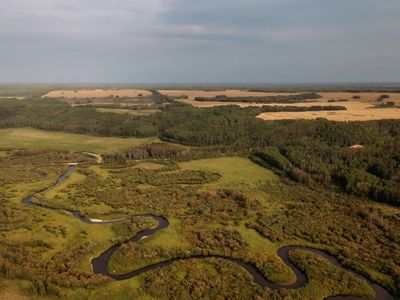
Thinking about water naturally leads to thinking in terms of watersheds. You can design incredibly effective conservation strategies simply by asking: How does water move across this landscape, and what do we need to keep that movement intact? That brings forests, grasslands, wetlands, rivers and lakes into one system.
A great example is forest restoration for salmon in places like Salmon Parks. At first glance it’s a forest project, but the real focus is the river: the forest shapes the water, the water shapes the salmon, and the salmon return nutrients to the forest.

Groundwater is another piece we overlook. Much of the water shaping ecosystems moves underground. Regenerative practices — like returning cropland to perennial grasses — can dramatically increase groundwater retention.
Because so much of Nature United’s work supports Indigenous-led stewardship, we avoid rigid categories of land versus water. Indigenous governance takes a holistic approach. Our role is to support that and articulate how the work benefits entire watersheds.
3. What challenges are facing freshwater ecosystems in Canada, and how is Nature United responding?
At the most basic level, the big questions are: Is there enough water? And is it clean? These questions matter for communities, species and ecosystems.
Nature United won’t solve every water issue — Canada is vast, and challenges are local — but we’re part of a global organization with deep experience in setting goals for water quality and quantity and understanding how large infrastructure decisions shape rivers. We can bring that expertise into Canada to support partners and Indigenous nations.

People often think first about the land being protected, but as the management plan has come together, water has emerged as a central focus.
A lot of this work is advancing in our Northern Program. One promising area is watershed stewardship and investment models: how can people downstream who depend on a healthy watershed help support the stewardship happening upstream?
We’re also catching up to what Indigenous Nations have been saying for generations — especially in water‑rich peatland regions like northern Manitoba. As we support Indigenous-led conservation by these Nations, we’re learning to recognize and elevate those freshwater benefits.
4. Can you share an example of a project that demonstrates Nature United’s impact on freshwater?
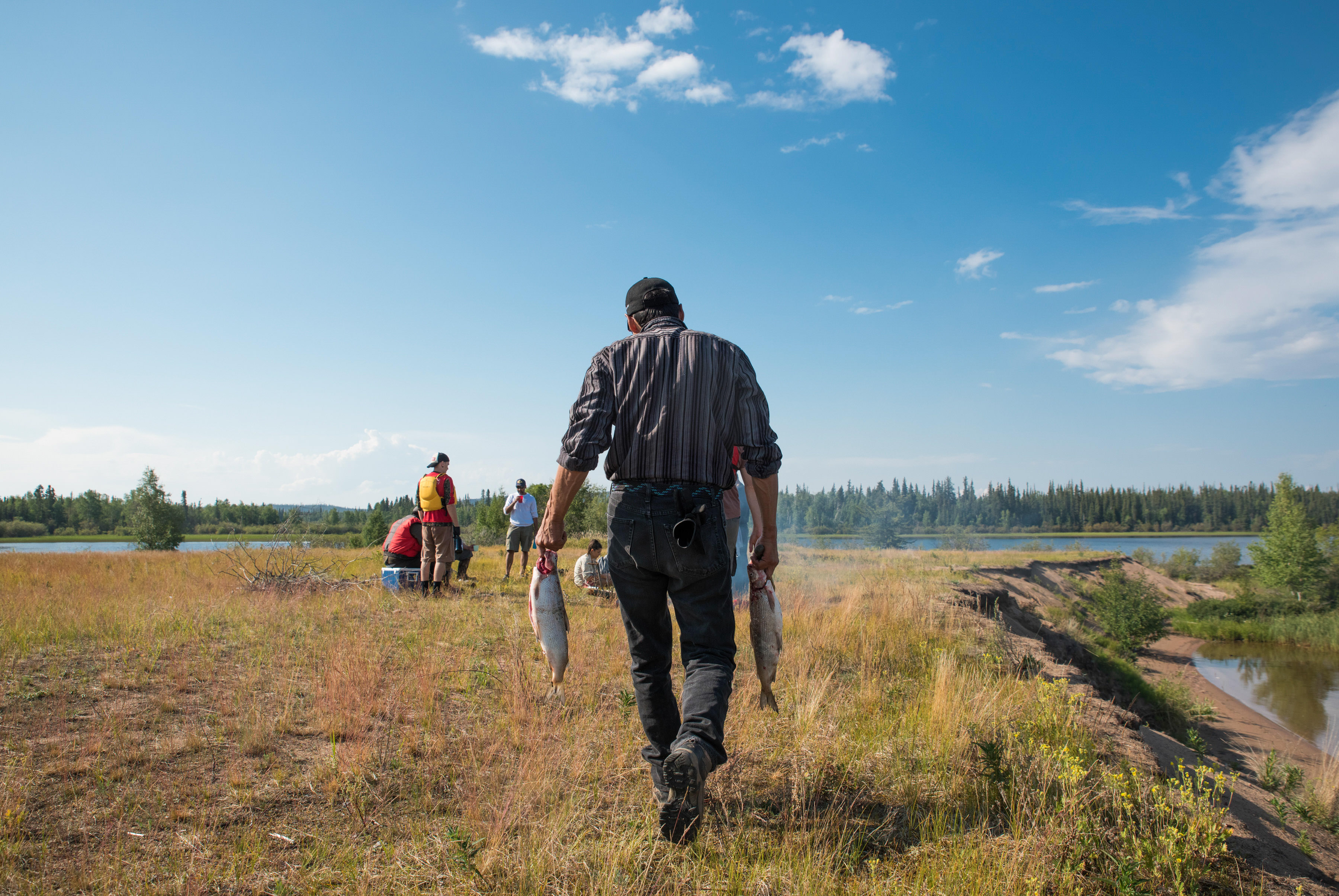
Thaidene Nëné Indigenous Protected and Conserved Area (IPCA) in the Northwest Territories is a great example. People often think first about the land being protected, but as the management plan has come together, water has emerged as a central focus.
The plan includes a dedicated section on water — what it means, how it should be protected, and how land‑use decisions must consider impacts on water. That’s an agreement among three governments, embedding freshwater stewardship into how the area will be managed.
5. What is your favourite freshwater species and why?
Jenny Brown: The birds of wetlands are my favourite, especially sandhill cranes. Wetlands are vital rest stops for migratory birds and few experiences compare to watching cranes move across a marsh, their calls carrying for miles. From solitary pairs wading in shallow water to flocks lifting off at dawn, these places are defined by cranes in motion. I began my career wading through a huge marsh in eastern Oregon, where daily immersion revealed how closely birds respond to subtle shifts in water levels and plant life.
More Stories

Pulse of the Land: Supporting Indigenous Youth and Communities in Building Intergenerational Leadership
Youth On the Land Opportunities Community Network is developing a new online hub designed to connect and uplift more than 350 individuals involved with Indigenous-led on-the-land programs.

From Vision to Impact: How Conservation Finance Can Accelerate Ambitious Environmental Outcomes
By blending philanthropy with innovative financial tools, organizations such as Nature United are driving lasting change for people and the planet.

Uniting Knowledge Systems
New tools integrate science and Indigenous knowledge to protect sacred places and caribou in the Northwest Territories.